

jannah beth is back
This is Jannah beth’s first piece of new music in three years, after several years spent deeply embedded in the music ecosystem working at Elefant Traks, founding Offbeat Collective; an artist-led studio hub and community in NSW, running initiatives like ONE OFF TRAKS; an annual gender diverse writing camp, and championing artist development.
We caught up with Jannah to dive into the new single “Vintage Red Clubman”, the first glimpse into her upcoming EP Orbits & Echoes. She talks about her evolving approach to music, working with Andrew Meyer and Jeauneil, and the cinematic, romantic world behind this new chapter.
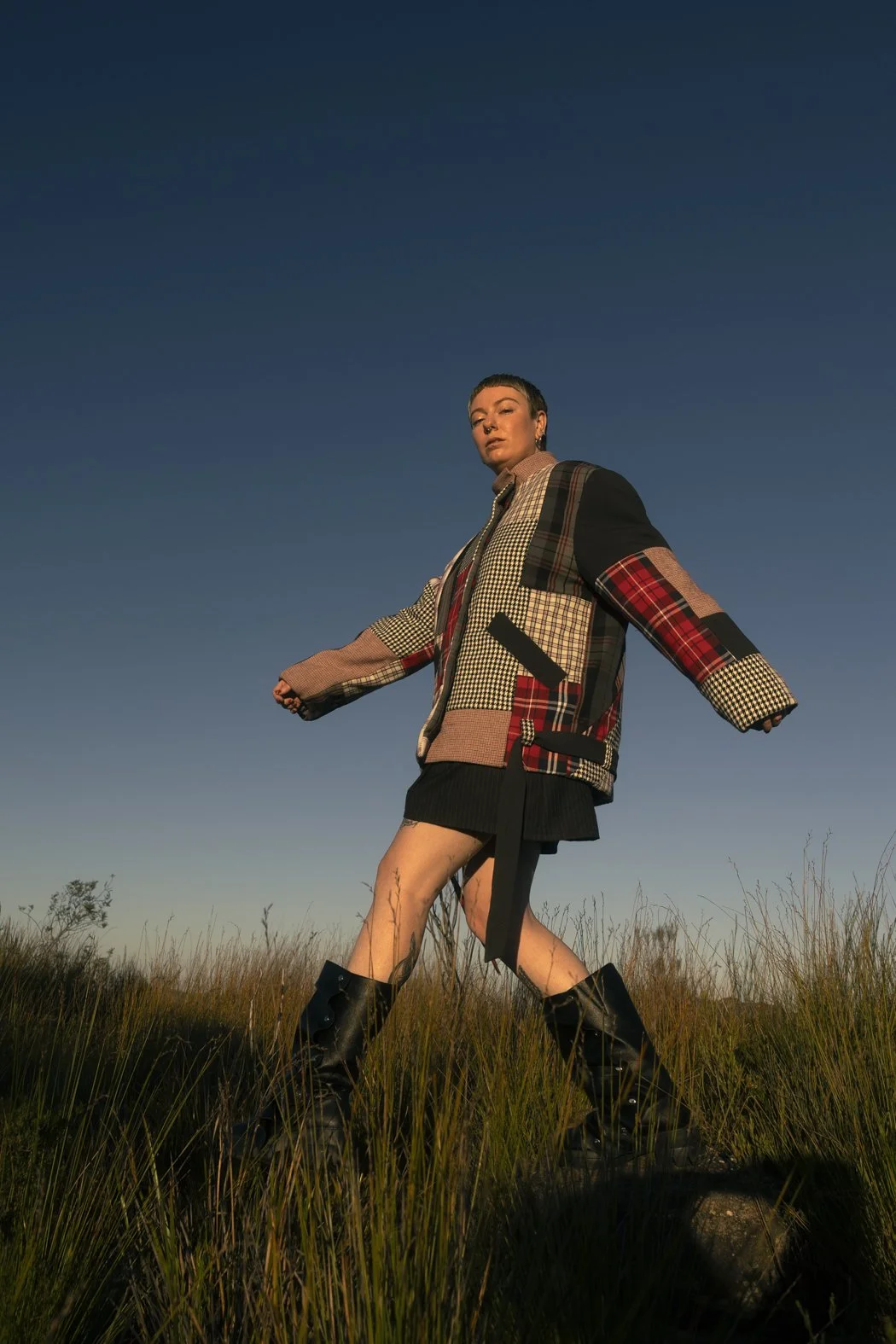
Temper: Vintage Red Clubman is such an exciting and romantic release, how does it feel to have entered this new era?
Jannah Beth: I feel strong, confident, peaceful, grateful and detached in a healthy way. I’m really proud of this project and the whole process around it.
Believing in myself and going through the creative process this time helped me resolve some things about the way I see myself as an artist. I realised I don’t really have anything to prove to anyone anymore but more importantly, I don’t have anything to prove to myself either.
That shift has made this era feel really calm and certain.
T: How do you want listeners to approach your new music? Does the interaction feel different to previous releases?
J: With this project I’ve again had moments of wondering if people will relate to it, because in many ways it feels like my diary, just packaged up as songs.But playing these tracks on tour this month with The Herd, I’ve actually seen people connecting with them in real time, which has been really special.
I’m excited for the listeners who will sit with the full project, especially the people who pick up the vinyl and experience it as a whole body of work.
T: This is your first release in a couple of years. How has your experience around releasing music changed in that time?
J: I feel a lot more healthily detached from the release itself, especially when it comes to things like streaming numbers or play-listing. Because I work with so many artists on their release strategies now, I understand the mechanics of that world really well. But at the core, for my own music, I just want to enjoy each step of the process and trust that the music will find the people it’s meant to connect with.
T: How does “Vintage Red Clubman” sit within Orbits & Echoes? Is it the emotional centre, the opening chapter, or something else?
J: I actually see it more as the outlier of the project, which is part of why I chose to lead with it.
A lot of the rest of the project lives in a more escapist space, it drifts through different emotional landscapes and moments of reflection. “Vintage Red Clubman” sits slightly outside of that because it’s where I feel most grounded. It holds this sense of certainty, but a certainty that comes from questioning everything.
The title itself carries this nostalgic road imagery, something cinematic and warm, like the beginning of a long drive into the story.
T: The work you’ve been doing over the last couple of years is so integral to the music industry sphere. Has that influenced your creation process as well?
J: Not so much in the actual creation process, that part still feels really instinctive and protected. But it has definitely changed my relationship to releasing music and my position within the industry. I’m much more comfortable with every step of the process now, and I don’t stress myself out the way I used to.
T: If you had to put an information label on “Vintage Red Clubman”, what are the five words that would be written?
J: Warm.
Cinematic.
Romantic.
Certain.
Hopeful.
T: Take us into the world of writing and recording this single. Are you lyrics first, then melody, or do you hear it before you write it?
J: This song was actually a bit of an outlier compared to the rest of the project also in the sense of it’s process. Some of the verses and lines had been sitting in my notebook for a while. Most of Orbits & Echoes was created during ten days in Auckland with Andrew Meyer where we basically locked ourselves away and built a little creative bubble for the songs to come through.
For this one, Andrew started playing a set of chords and those older lyrics suddenly resurfaced. We made a first draft pretty quickly, and later worked on it in the Blue Mountains with Jeauneil Baptiste.
Jeauneil added all these incredible layers, and the next morning I sat down at the computer and completely rearranged the structure and the build of the track. I remember thinking, “wow… I feel like a boss right now.
T: You worked with Andrew Meyer and Jeauneil on this track. Can you explain the dynamic of working with this team?
J: I’m not sure I’ve fully found the words yet for what meeting and working with Andrew has meant for me creatively and I think that’s still unfolding.
What I can say is that Andrew created and held space for me in a really exceptional way. He helped me move through hesitation and find a sense of peace in the creative process. The way we work together feels very complete, and there’s a lot more to come from that collaboration.
Jeauneil is a musician I hold in incredibly high regard. He’s so talented and intentional with everything he does. After Andrew and I had carved out the core of the songs, Jeauneil came in for a few days and added these beautiful layers and re-harmonisation that really deepened the world of the track.