“Northern Grit Under Southern Skies: Sam Fender at the Sidney Myer Music Bowl
words: CHLOE ABOTOMEY
photography: BREE MAY O’HAGAN
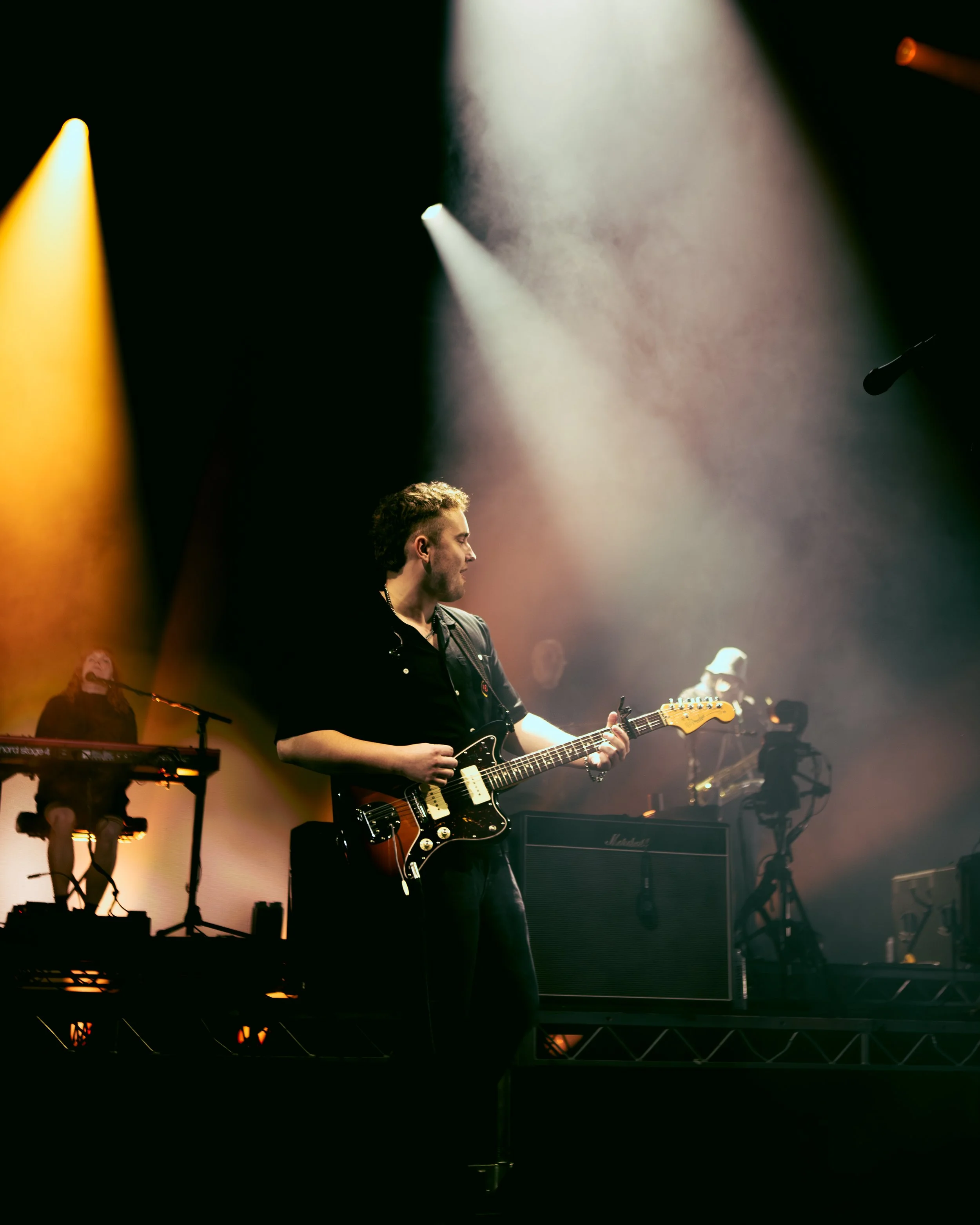
Melbourne has a way of holding its breath just before a great show begins. On the lawn of the Sidney Myer Music Bowl, people pressed into picnic rugs and plastic cups, scanning the fading sky as stage lights sharpened under the famous canopy. When Sam Fender finally walked out guitar slung low, grin unmistakably cheeky even from a distance the entire Bowl seemed to exhales at once. And then, with the first brooding chords of “Angel in Lothian,” the night shifted from anticipation into something more electric: communion.
This wasn’t just another tour stop. Melbourne had already sold out his first date in presale, allowing a second show to be added to meet demand. By the time Fender landed here jetlag jokes and all he was stepping into a crowd that felt more like a welcome party than an audience.
Before Fender even arrived, the tone was set by Holly Humberstone, whose gentle, aching set cast a hush over the venue as the sun dipped behind the trees. Her set described as vulnerable and magnetic, the crowd seemed to agree, fans later praised how rare it is for Melbourne audiences to collectively quiet for an opener. It was an unexpectedly intimate start for what would become a night of massive emotional swings.

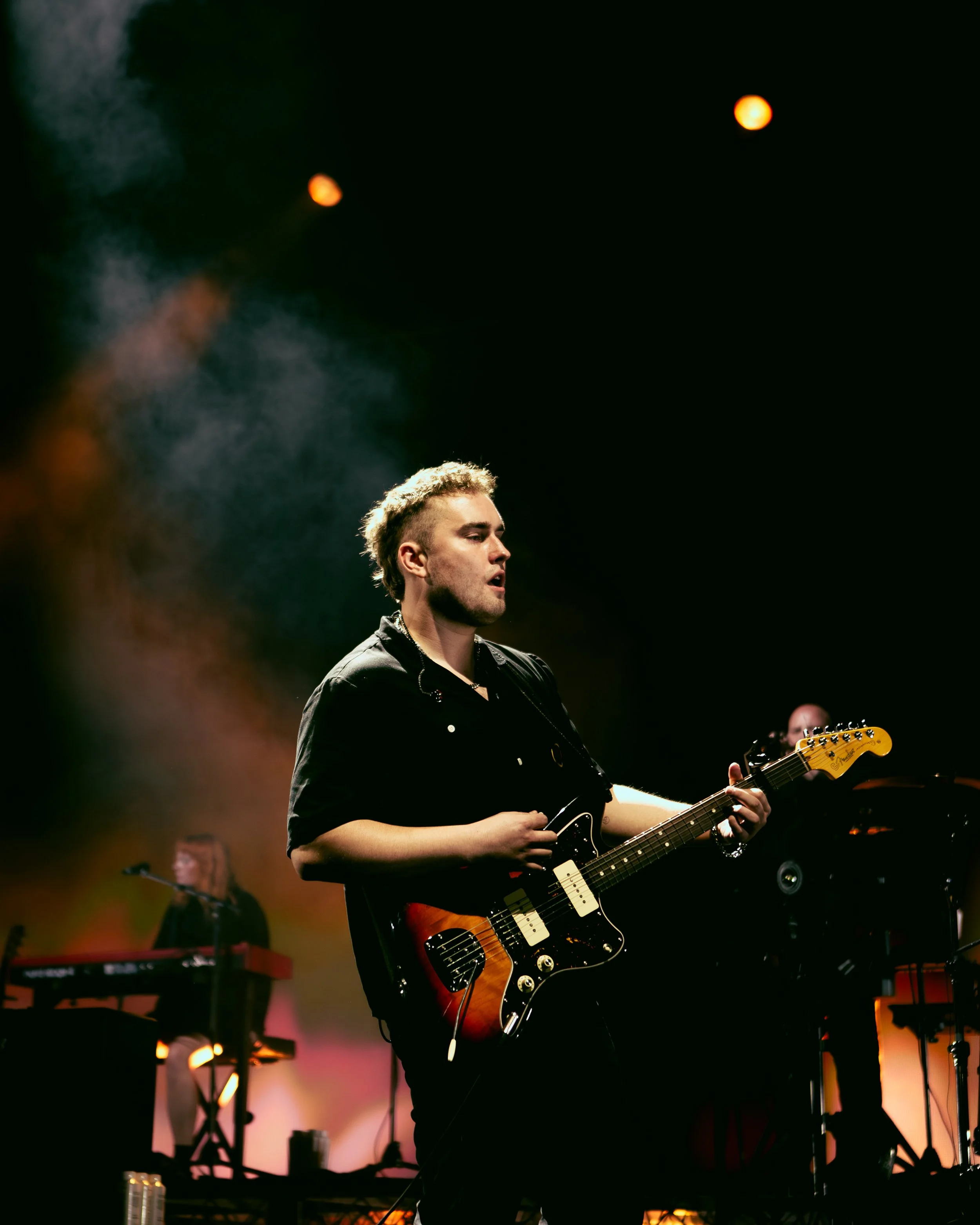
When Fender hit the stage, he didn’t ease in he detonated. “Will We Talk?” arrived early in the set, and as soon as the chorus hit, the Bowl roared like a single voice. This is quite the rarity in this city, since becoming a Melbournian myself I am now privvy to the reluctance of a singalong.
Band’s chemistry was immediately obvious: tight, muscular, and joyful. Fans noted that Fender “looked happiest when the whole crowd screamed the chorus back at him.” Under the lights, that happiness was palpable.
But what Sam Fender does better than most is walk the tightrope between stadium rock bravado and intensely personal storytelling. Nowhere was that clearer than on “The Borders” a track already known for its emotional density but live, under the open sky, it became something else entirely. The look of sheer joy and surprise that was evident on the very lucky fan who was invited to play acoustic guitar alongside Fender will stick with me forever. The crowd stilled. Phones lowered. It felt like everyone around me stopped breathing.
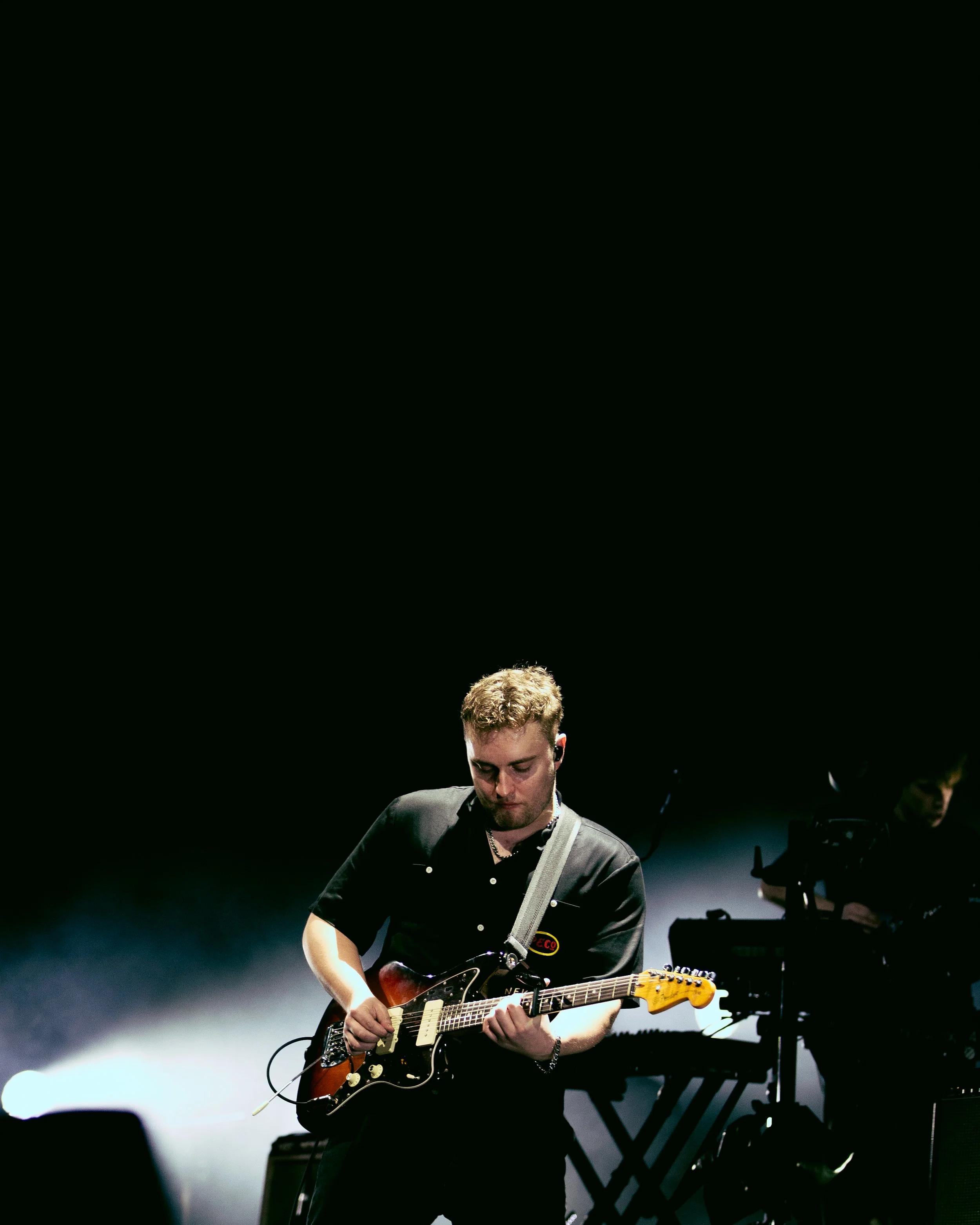
The night’s most tender moment came with “Spit of You.” Fender lined the performance with family photographs projected behind him — a simple addition that turned the venue into a giant living room, strangers collectively sinking into a memory that didn’t belong to them but somehow felt familiar. Tears were visible even in the dark. A fan later said: “Didn’t expect to cry at a Sam Fender gig but ‘Spit of You’ with the family photos… yeah, that did me in.”
For me, it’s always these human elements; the laughter in the banter, the unguarded admission of jetlag, the way an artist steps back from the mic to let the crowd take over that allow for surprising intimacy in a venue built for thousands. A moment where everyone feels as if the person on stage is connecting directly to their soul.
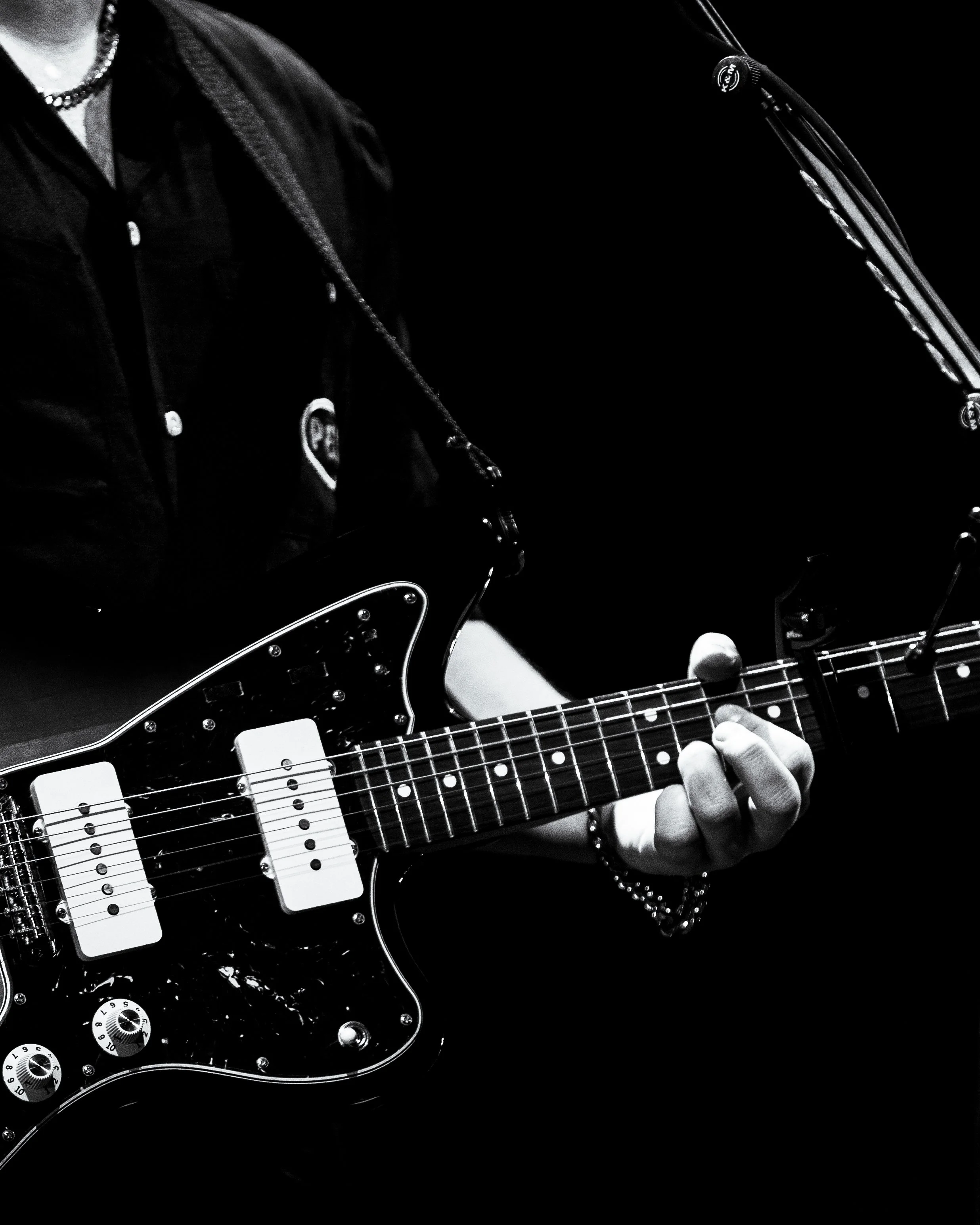
Then of course the decision to play an unreleased solo track, quiet enough to hush the entire Bowl, carried a sense that Fender was letting Melbourne in on something special. A secret that we were all desperately clinging to like hungry thieves in the night.
If there’s one thing Sam Fender understands, it’s catharsis. And Melbourne was more than ready for it.
“Seventeen Going Under” arrived like a tidal wave, the kind of communal outpouring that doesn’t just echo it vibrates through your chest. The Bowl’s sloping lawn transformed into a sea of bodies moving in imperfect unison, arms thrown around shoulders of people they’d never met.
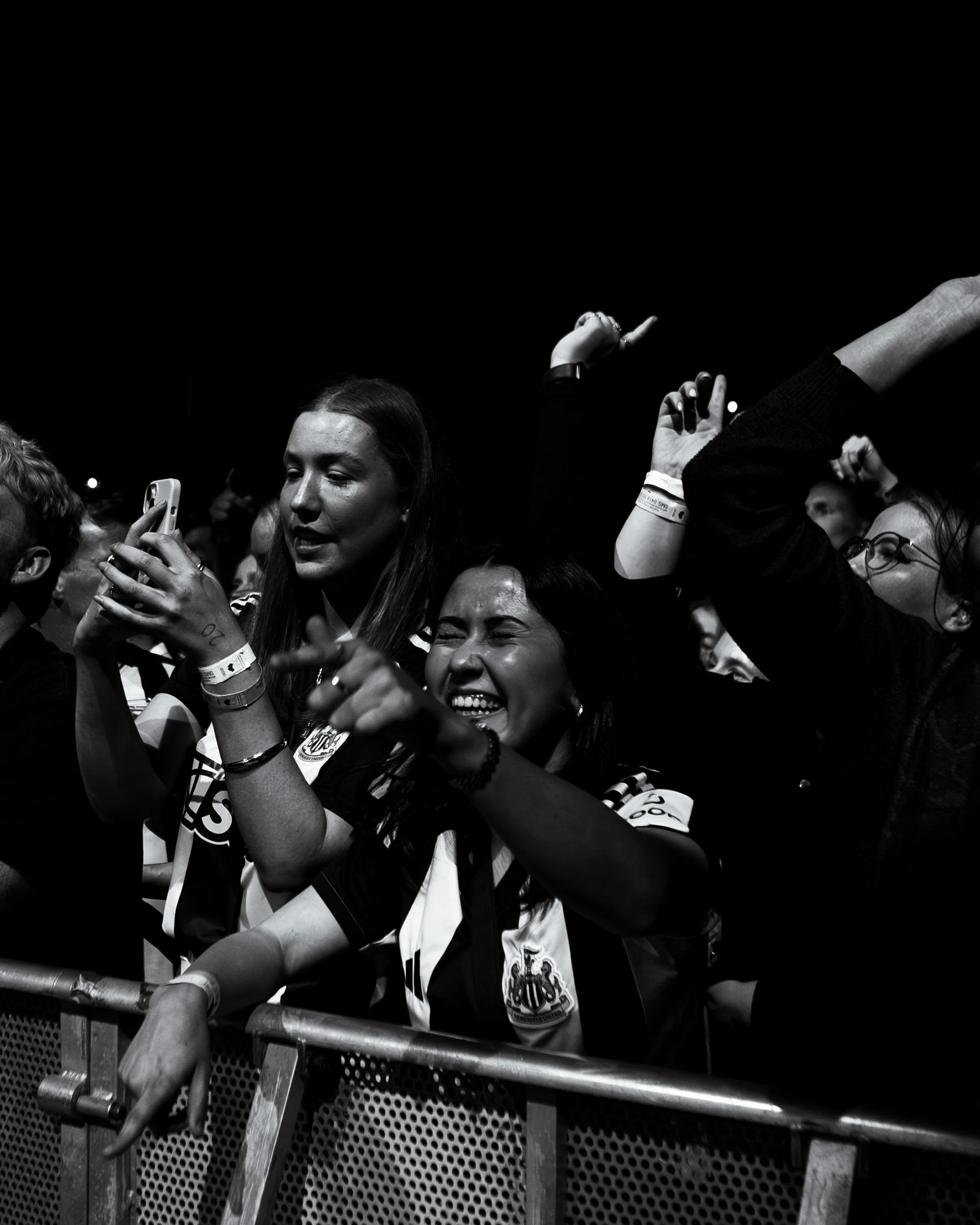
The encore struck a beautiful emotional arc: the haunting build of “The Dying Light,” followed by the euphoric explosion of “Hypersonic Missiles,” earning its reputation as one of the great modern live-closers. Confetti cannons painted the air, dramatic, sure, but who doesn’t love a bit of drama.
For all its triumph, the show wasn’t without its characteristic outdoor venue quirks. I took a visit from my seat up to the lawn and quickly realised that the sound occasionally thinned or skewed a little treble-heavy. But this is a well known trait of the Bowl’s acoustics. The sheer scale of feeling in the space more than covered the technical edges.
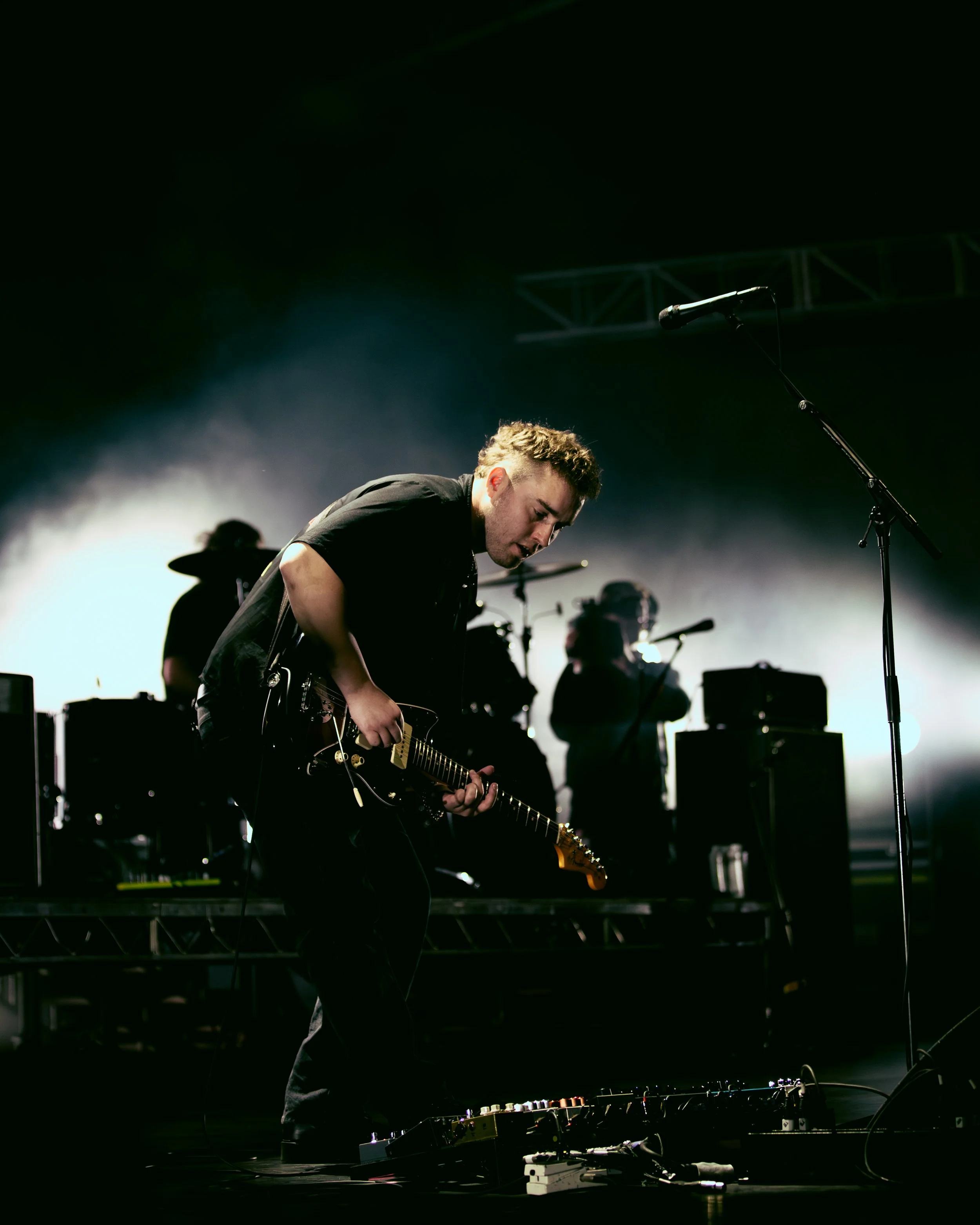
By the end, as the lights lifted and the crowd reluctantly peeled away, it was clear Melbourne had given Sam Fender something he actively fed off and that he returned in full. He hinted that these shows might be among his last before taking some time off. Hopefully, to write us more offerings in the form of a new album but also given how hard Fender performs, perhaps a well deserved break as well.
This concert wasn’t just another touring milestone, it felt more like a conversation between artist and city. A symbiotic trade of vulnerability for volume, grief for euphoria, stories for echoes. Under the southern sky, Fender’s northern grit didn’t just land, it soared. A night like this doesn’t fade quickly. And judging by the lawn side chorus that lingered long after the lights snapped off, Melbourne wont be ready to let go just yet.