

Outrun, and All That Follows: Sara Berki on her biggest year yet.
WORDS: cHLOE abOTOMEY
Photo credit: tEEL STUDIOS
It’s been a whirlwind rise for country artist Sara Berki, whose year has unfolded like a series of pinch-me moments. from major award nods to a debut headline tour that placed her firmly on the national radar. With her new EP Outrun, she steps further into her voice, revealing the stripped-back storytelling and emotional honesty that have made audiences stop, listen, and stay. We caught up with Sara to talk about the chaos, the craft, and the quiet heart behind a year that’s changed everything.
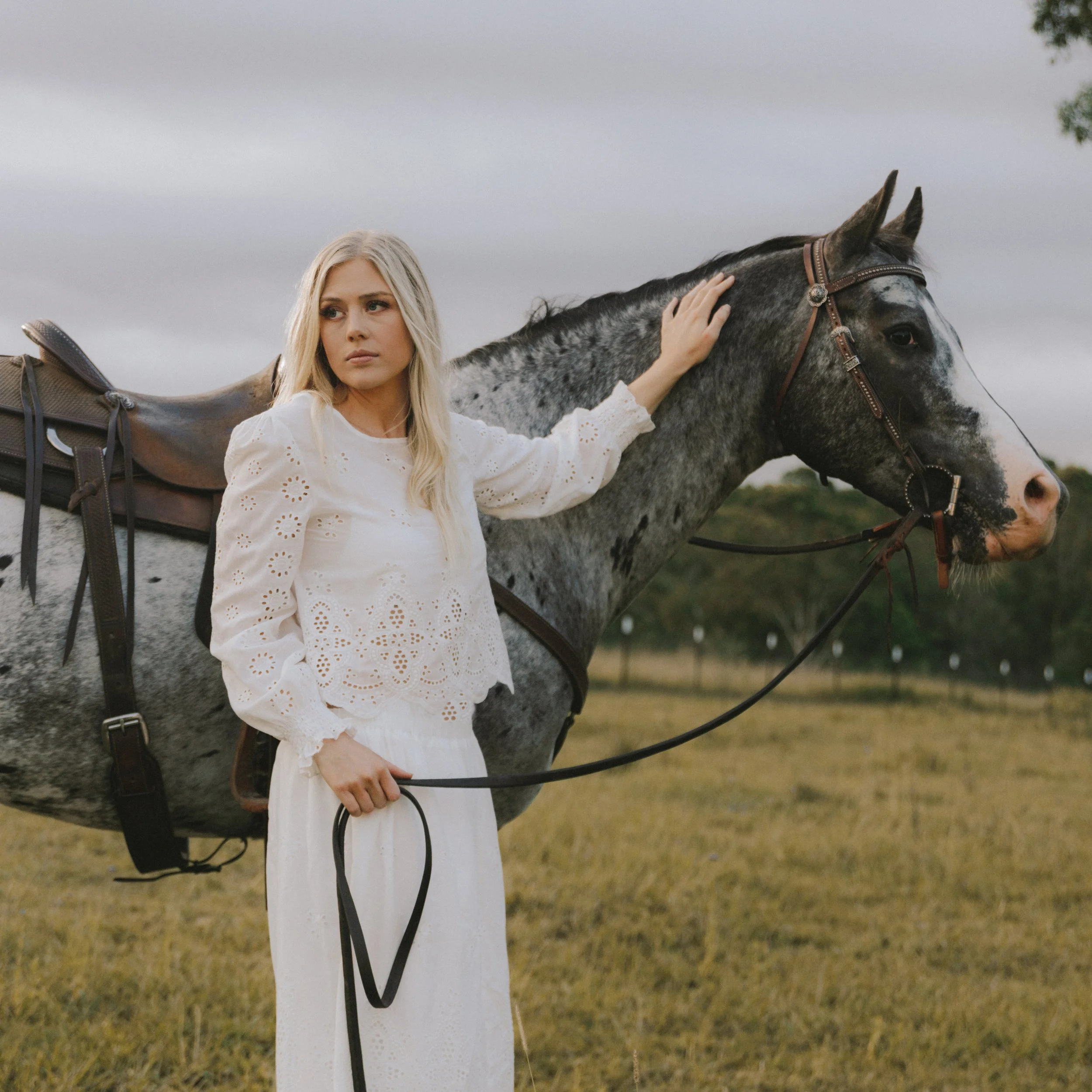
TEMPER: Congratulations on the release of Outrun, you must be so thrilled to finally be putting it out in the world. You wrote the majority of it entirely solo that's pretty wild. How would you describe that experience of just going for it?
SARA BERKI: I haven't been an artist for that long. When you look at things, I've really only been doing this professionally for the past four years. So all the time before that, I always wrote by myself. I didn't even know what a co-write was. I didn’t know that so many artists get in rooms, sit at a table, and work together. Coming from writing so much on my own to being exposed to a world where you don’t have to write by yourself was like learning a foreign language. Even now, I dip my toes into co-writing I don’t mind it, but most of the time, I really love writing solo. I think it's because I don’t have to explain certain feelings or places I’ve been. I get quite protective of things, and that’s probably just a coping mechanism from traumatic events that happen in people’s lives. It’s taken me four years to realise it, but I think that’s how I get through certain situations, and I apply that in my songwriting. And I think it's a daunting thing to have to open up in general, especially when it's about things you’ve gone through and you're sitting in a room with people you've never met before but are expected to share with. That alone could scare anyone. So being protective in a way where you don’t have to be that vulnerable with strangers, you just have to be vulnerable with yourself, feels more natural to me.
T: Is it hard to be that vulnerable, knowing that you're putting your music out into the world? Or is it more cathartic? Does it feel less daunting releasing it publicly than it does exposing those feelings in a room full of people who might have professional critiques?
SB: Yeah, definitely. When I'm writing, if a song takes me back to something I’ve lived through, I have to sit with that version of myself again. Songs like ‘Porch Light’, ‘Happy House’ and ‘Outrun’ I grieved through those. I had to sit with those feelings and tell myself, “It’s okay to write this.” Songwriting becomes a way to overcome something you’ve felt. But being vulnerable in front of a crowd? That’s still really hard for me. Especially when it’s just me on stage. I need the audience to feel like a safe space, like they’re saying, “It’s okay, Sara. We see what you see. We hear you.” I don’t write these songs just for me. I write them for the people who connect with them. But in the moment, it can still be hard to quiet your mind and be fully present. I still find it hard to be vulnerable with people.
T: Do you feel like you’ve had to cultivate that kind of relationship with your fans, or does it happen more naturally? Perhaps people who’ve been through their own difficult experiences are drawn to your music and to you as a person?
SB: I think it’s more that we don’t have to talk about it. When someone comes through a signing line, I just want them to know I’m exactly like them. I’m just doing a job that looks different. I spent ten years as a hairdresser, and what I loved about that was connection. I realise now that that’s my whole purpose in being an artist too. People don’t have to tell me everything, I can just tell. When you look into a crowd, you can see who’s connecting, who’s present. That’s one of the most incredible parts of being an artist.
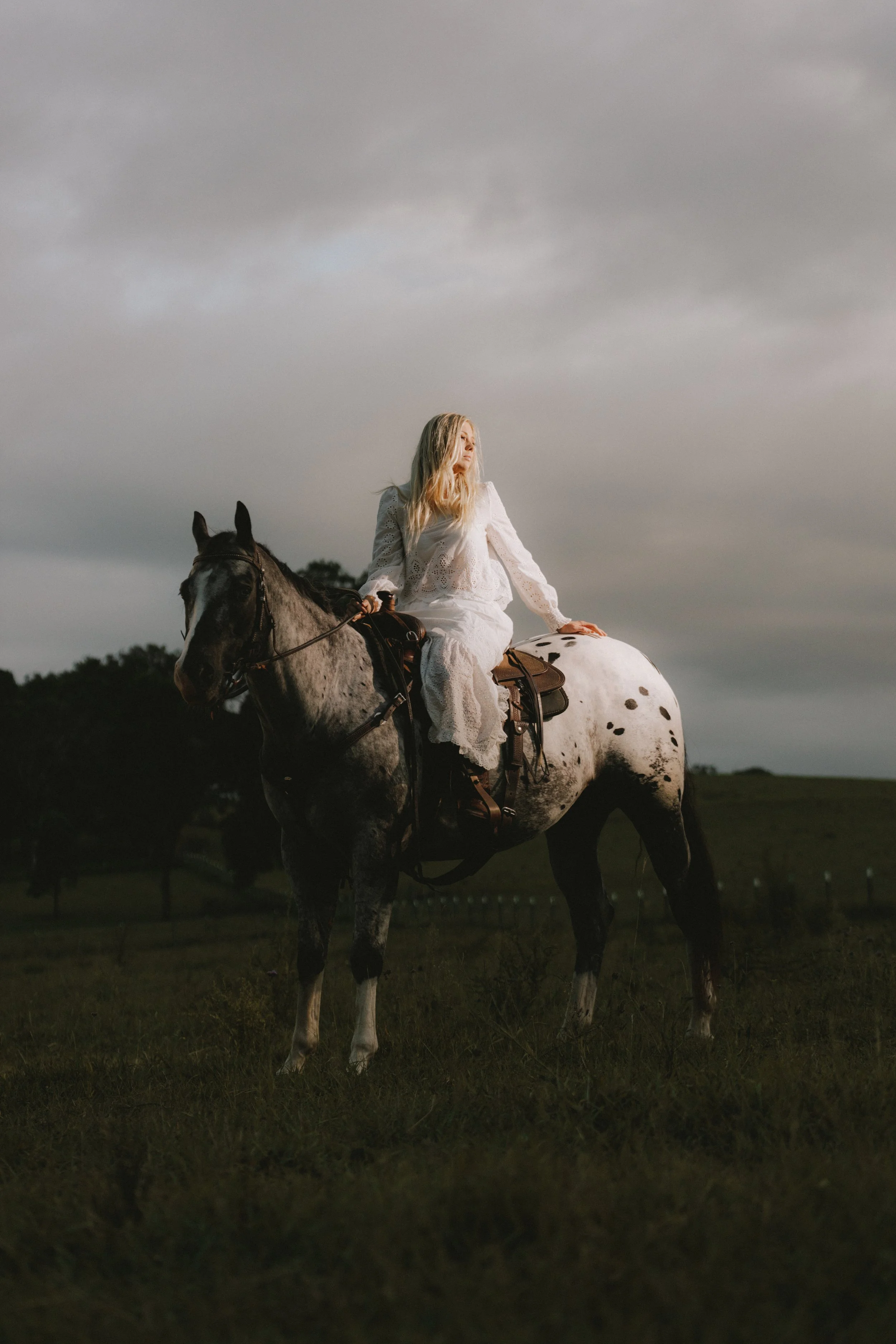
T: With the EP, was it a long process to write everything, or did the songs come together quickly? Were they already mostly formed and it was more about refining them?
SB: Some of the songs on Outrun I’ve had since 2021 or 2022, but they didn’t feel right back then. They didn’t fit the world I was in. I had to grow, personally, musically, and career-wise before I felt ready to release them. When I wrote songs like ‘Porch Light’ and ‘Heaven and Hell’, I was still playing pubs, weddings, little gigs. I didn’t fully grasp how raw and captivating they were until my writing matured and I felt grounded enough to release them. A song like ‘Outrun’, on the surface, it’s about being told you can’t do something and pushing forward anyway. But the truth is, I had to live the experience behind it before I could write it. A lot of this EP is about maturity.
T: Working with Brandon Hood and Billy Montana, how did their involvement shape the final version of the song, especially considering you predominantly write solo? Did anything in that process surprise you or shift the way you approach writing or recording?
SB: Going from writing solo to writing with other producers and artists is a big shift. If you’re creating something for yourself, you have to be selective about who you work with. It’s easy to just release anything, but knowing what you want, your direction, your style, your people, is so important.For my first Nashville trip, I tried not to expect too much, but I also knew how incredible the writers over there are. When the co-write with Brandon and Billy came up, I was honestly dumbfounded. I’m a huge fan of Brandon’s work, he’s phenomenal and Billy has so many hits. I was just grateful to be in the room. I didn’t want to walk in thinking, “We’re going to write the best song ever,” because you can get let down. But we were all on the same page. Locked into the storyline. Completely in it. It was a wild four hours of writing. I wish every co-write was like that.That’s connection, when everyone in the room is on board, open, and not judging each other. That’s what makes a good song.
T:It sounds like it ended up being a really positive experience, even though it was daunting. Did you feel a certain level of pressure the first time you walked into that room?
SB: Oh, absolutely. I walked in thinking, You need to do something good today. But I don’t always give myself enough credit as a writer. People can tell you you’re good, but it doesn’t really land unless you believe it yourself. You have to feel it for yourself.
T:You’ve talked a lot about connection and how important that is for you as an artist. Is that something you hope people feel and take away when they listen to the EP?
SB: Definitely. With this style of music, each song has meaning, whether it’s lived or imagined. ‘Lily of the Valley’ isn’t something most people have experienced literally, but it’s about connection. Putting yourself in the story like a movie. You might be Lily, her dad, the boy by the river… it’s about stepping into the world of the song. Then you have ‘Happy House’, which is something many people have lived, parents separating or staying together when they shouldn’t have. I just want people to connect with what I’m trying to say. That’s all I can really hope for. Earlier this year, what I released wasn’t as much about connection, it was about showing my diversity, different sounds. But this EP, it’s about connection through and through.
T:Just quickly touching on your live shows — you’ve been super busy lately. How have you found playing the new songs, and have any of them surprised you in terms of how the crowd reacts?
SB: It’s been a wild time. I counted 13 shows in eight weeks. That’s a lot for anyone, the travel, the promo, the signing lines. But there’s nothing like it. I’m so thankful I get to do this. Playing the new songs has been incredible. We’ve been opening with ‘Outrun’, and it feels like this soaring, cinematic opening scene, it sets the tone. Most of the new songs aren’t in the set yet, and I love that. We’re saving things and building hype for next year. I’m back for CMC Rocks, which is one of the biggest country festivals in Australia. They were one of the first festivals to take a chance on me,. I had one song out at the time so being back for the third time is huge. And with the EP coming, we’re building the whole show around the Outrun world. And yes, we’ve been playing some even newer material. Songs that might be part of another project Outrun connects to. There’s a reason they’re called the “Valley Versions.” That’s all I’ll say.
T: Now, you’re about to have your first baby, but it doesn’t sound like you have any plans to slow down. What does 2026 have in store for Sara Berki, aside from becoming a mother?
SB: I take my hat off to every woman who’s done this before me. Every woman with aspirations in this industry — it’s so hard. On a good day, it’s hard. And I get it now. You don’t understand until you go through it. With all the shows this year, I knew I’d be pregnant at this point, I just didn’t know how hard it would be. I couldn’t ask anyone, “Have you played 13 shows in eight weeks at 29 weeks pregnant?” You just learn by doing. But I’m proud of myself. I look at others in the industry and think, If they can do it, I can try. Shows have been a lot — it’s physically demanding, and playing pregnant is another level. Releasing the EP was non-negotiable. It had to come out now. It gives people time to live with it before next year’s shows. But doing all the release work and the shows simultaneously has been a lot. My last show I’ll be 31 weeks pregnant. We’ll see how that goes. I’m excited. I’m thankful. One day my kids will be able to say, “Mum plays shows.” And that’s pretty cool. But it’s not just me. There’s so much help behind the whole “Sara Berki” project; my manager, my label, my husband, so many people. I’m really thankful for that.